Middle East · Fortified Structure
Masada
Israel
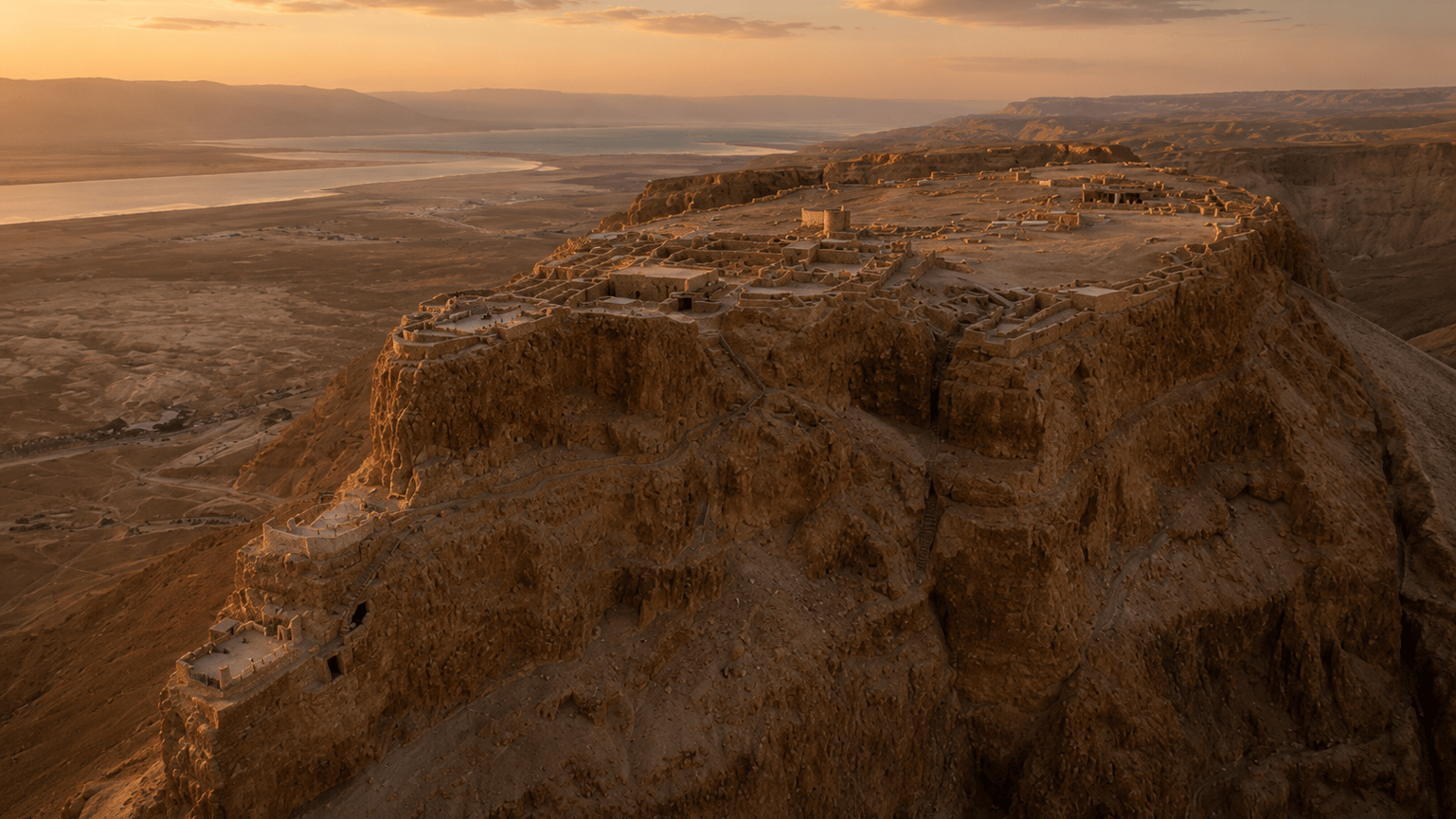
Masada channels access onto steep desert approaches beneath a broad fortified summit. Its protection is largely passive; habitation is much harder. Heat, exposed ruins and unverified cistern contents make dependable water and usable shade immediate priorities.
Overall
6 out of 10Defensibility
8 out of 10Isolation
7 out of 10Sustainability
3 out of 10Ranking context
How this base ranks
Global
#16 of 88 · Top 18%
Region · Middle East
#1 of 5 · Top 20%
Base Type · Fortified Structure
#7 of 18 · Top 39%
Field assessment
At a glance
Bottom Line
A formidable position for watching approaches, but a harsh place to remain. Choose it only on the strength of water and shelter actually verified on the summit, not its ancient siege reputation.
Biggest Trade-off
The climb that restricts incoming pressure also makes carrying water and evacuating an injured person demanding. Strong access control does not make daily desert life forgiving.
Most Likely Failure
Insufficient safe water and repeated heat exposure exhaust the group’s ability to live and work on the plateau, even while the approaches remain easy to observe.
Score rationale
Why it scores this way
Defensibility · 8/10
Cliffs, gates and surviving casemate walls offer strong passive resistance. Ruined sections and the western Roman Ramp remain routes to address, so the plateau is defensible rather than sealed.
Advantages
- The summit offers internal space to separate activity from a threatened entry.
Limitations
- The Roman Ramp provides an established western route despite the imposing cliff setting.
Isolation · 7/10
The Judaean Desert separates Masada from dense population centres. Roads and visitor infrastructure still bring people into the area; the steep final climb is an additional local barrier, not proof of total remoteness.
Advantages
- Harsh surrounding terrain limits casual movement from the wider region.
Limitations
- Established visitor access means the plateau is a known destination with usable approaches.
Sustainability · 3/10
Toilets, shade and a large historic footprint support an initial foothold. Much of the summit remains exposed archaeological fabric, leaving daily rest, hygiene and heat management materially compromised for a resident community.
Advantages
- Existing shaded gathering areas provide useful relief without new construction.
Limitations
- Visitor comfort measures do not establish continuous residential shelter or sanitation throughput.
Survival horizons
How survival changes over time
Prove water before settling
First 7 Days
Check accessible water, shaded rest space, sanitation and both ground approaches. Base the occupation on actual conditions; do not spend the first days searching a huge cistern system on the assumption it is full.
Positive factors
- Long sightlines help a compact watch identify approaching movement.
Risks
- Heat can make even routine carrying and inspection costly before a daily rhythm is established.
Count water and carrying effort
First 100 Days
Track consumption, water quality and the work needed to reach supplies while inspecting occupied ruins and toilets. Reduce unnecessary trips; a defensible summit can still impose an exhausting household routine.
Positive factors
- Core defensive geography remains effective without powered access.
Risks
- Shrinking water availability or failed hygiene can overwhelm the benefit of continued control of the paths.
Catchment must deliver
Long Term
Lasting residence needs reliable collection, safe storage and food replacement. The historic flood-water system is a physical resource, but its present seasonal yield and operability are not established for the group.
Positive factors
- Passive walls and terrain retain value as machinery and external services become unreliable.
Risks
- A desert stronghold has no demonstrated internal food system to replace consumed provisions.
Visual survey
Gallery
Location context
The Lay of the Land
Tactical assessment
Practical Reality
Best Use
Concentrate living near inspected shade, sanitation and verified water access. Observe both principal ground approaches while keeping carrying work within the group’s heat and labour limits.
Strengths
- Steep sides and a small number of ground approaches concentrate observation.
- The broad plateau permits activities to be separated within the historic wall line.
- Integrated flood channels and cisterns offer substantial existing water-storage fabric to inspect.
Key Risk
Cistern capacity is not a measure of present safe water. Collection condition, stored volume, potability and the effort of lifting or carrying it remain decisive unknowns.
Weaknesses
- Exposed ruins provide less weather protection than their former palace and storehouse functions suggest.
- Extreme heat restricts safe work and can close access paths.
- Food renewal and usable water reserves are not established by the surviving collection system.
Reality Check & Constraints
Plateau toilets and shaded gathering places are useful visitor infrastructure. Ancient storehouses contain no evidenced provisions, and the visitor centres below do not become summit resources by proximity.
Assumptions / constraints
- The summit and integrated cistern approaches are included; foot-of-mountain visitor centres and campground are excluded.
- No filled cisterns, ancient food stocks, uninterrupted cable car or guaranteed resupply are assumed.
- A small organised community must carry out watches, water handling and ordinary upkeep without an inherited park crew.
Decision context
Rivals / Alternatives
Similar rival
Krak des Chevaliers
Syria · Fortified Structure
Krak des Chevaliers keeps the same fortified structure strategy, with only 1.0 points between the overall scores and closely matched defensibility pressure.
Overall 5/10
Strongest alternative
Fort George
United Kingdom · Fortified Structure
Fort George scores 6.7 overall versus 6.0, adding a stronger sustainability profile while staying relevant as another fortified structure.
Overall 6.7/10
Wildcard rival
Okinawa
Japan · Isolated Landmass
Okinawa changes the strategy: it is built around the isolated landmass strategy with a sustainability edge, while Masada holds more of the defensibility advantage.
Overall 3.7/10