Oceania · Subterranean
North Head Gun Emplacements
Australia
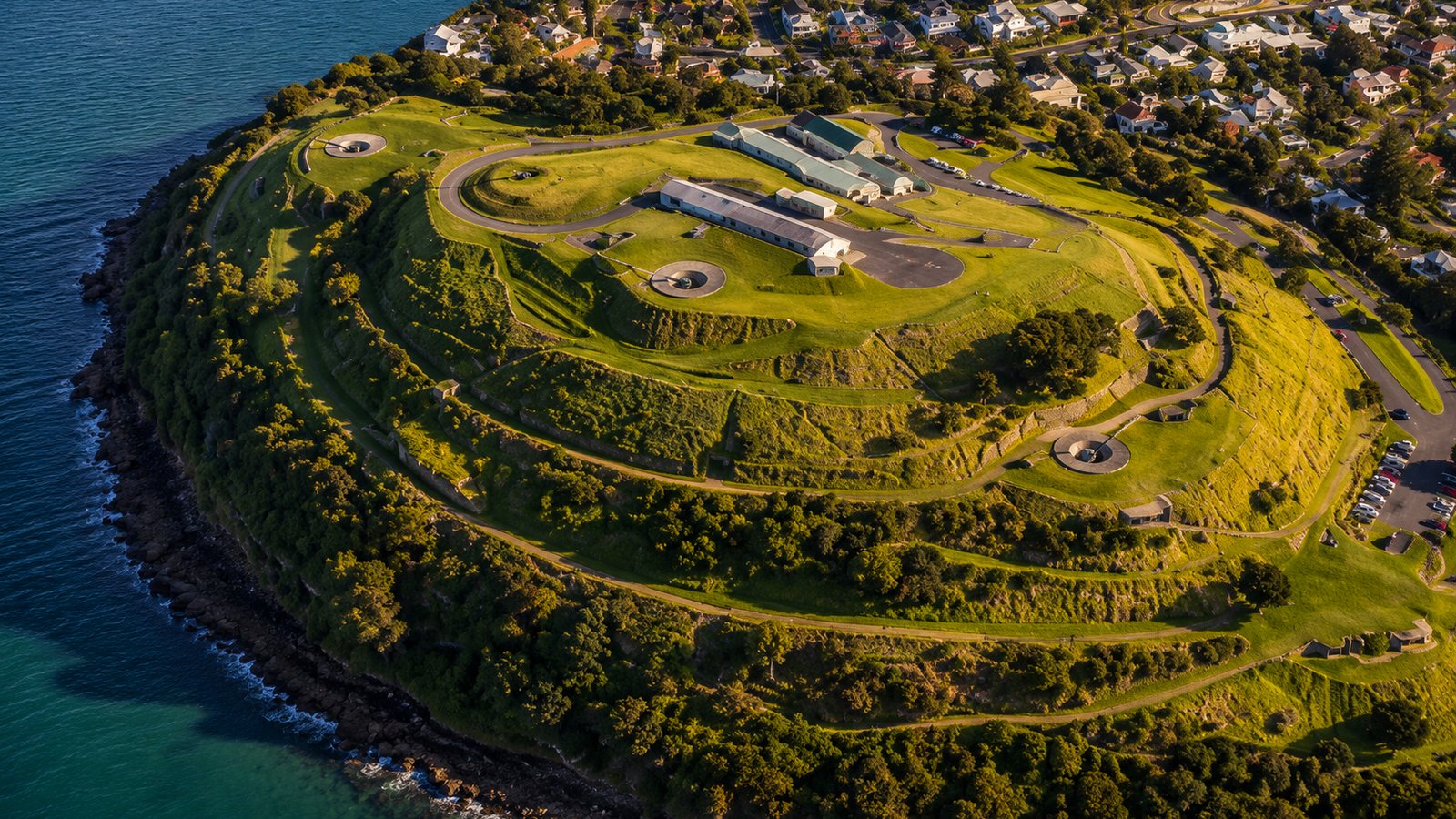
North Fort's concrete emplacements and underground rooms offer a protected foothold on Sydney's North Head. They remain connected to Manly, and the surviving military shell has no established independent water or food provision. The useful refuge is much smaller than the surrounding sanctuary.
Overall
3.3 out of 10Defensibility
6 out of 10Isolation
2 out of 10Sustainability
2 out of 10Ranking context
How this base ranks
Global
#81 of 88 · Top 92%
Region · Oceania
#4 of 4 · Top 100%
Base Type · Subterranean
#9 of 10 · Top 90%
Field assessment
At a glance
Bottom Line
Useful for shelter and watching approaches, provided basic water and hygiene needs can be met. Protection inside the fort does not make continued residence viable by itself.
Biggest Trade-off
Going underground gains protection while separating daily life from the water, food and services the fort is not shown to contain. Necessary trips outside would give back part of that advantage.
Most Likely Failure
Water needs draw people out repeatedly, weakening entrance watches and exhausting the advantage of sheltered rooms before the concrete structure itself fails.
Score rationale
Why it scores this way
Defensibility · 6/10
Concrete gun positions and the underground Plotting Room give substantial passive shelter and fallback. Public paths and heritage entrances still need controlling; the old military purpose does not establish a sealed present-day installation.
Advantages
- Moving behind reinforced fabric can reduce direct exposure after an approach becomes unsafe.
Limitations
- Controlling a tunnel entrance does not secure the open routes between all fort positions.
Isolation · 2/10
The headland separates the fort locally, but ordinary routes lead back through Manly. Harbour views and cliffs do not remove the nearby metropolitan population source.
Advantages
- The projecting headland limits some directions of ordinary ground approach.
Limitations
- Reaching the fort does not require crossing an open-water barrier from Manly.
Sustainability · 2/10
The underground complex supplies covered space, but current evidence does not establish the household services needed for sustained residence. Water, waste and habitable sleeping conditions require attention before extra rooms become useful capacity.
Advantages
- Existing enclosed rooms avoid starting with an entirely exposed camp.
Limitations
- Nearby visitor amenities do not prove cooking or sanitation inside the core fort.
Survival horizons
How survival changes over time
Inspect before settling
First 7 Days
Check safe access, room condition and exits, then inventory accessible supplies. Establish where drinking water and waste will go before assigning people to an underground sleeping area.
Positive factors
- Hard shelter gives the group a place to organise while watching immediate approaches.
Risks
- A protected room can be chosen before its essential daily supply route has been made workable.
Count the journeys outside
First 100 Days
Track water consumption, hygiene work and time spent outside the fort. Reassess occupation if repeated supply trips leave too few people for watches and ordinary structural checks.
Positive factors
- Passive concrete protection remains useful without maintaining an active weapons system.
Risks
- Domestic tasks can consume the available workforce despite the apparent simplicity of a bunker.
Shelter cannot renew supplies
Long Term
Continued occupation needs repeatable safe water and food replacement within realistic reach, alongside safe structural access. Neither a production system nor independent water provision is established inside the recorded boundary.
Positive factors
- The fort's protected rooms can retain fallback value even if permanent residence proves impractical.
Risks
- External provisioning leaves continued habitation vulnerable even while the shell remains intact.
Visual survey
Gallery
Location context
The Lay of the Land
Tactical assessment
Practical Reality
Best Use
Use inspected rooms as a compact refuge linked to watched entrances and a clear exit. Confirm a practical water and sanitation arrangement before treating the tunnel complex as a home.
Strengths
- Reinforced underground rooms provide shelter and fallback beyond the open headland.
- Elevated headland ground helps watch the immediate approaches.
- Much of the protective fabric works without powered defensive equipment.
Key Risk
No protected independent potable-water pathway is established inside North Fort. A supply route through the wider sanctuary or Manly remains an exposed external dependency.
Weaknesses
- Manly provides a direct connection to Sydney's surrounding population pressure.
- Current residential cooking, washing and sleeping services for the group are not established.
- Conserved concrete still needs inspection and upkeep; restored visitor access is not permanent structural assurance.
Reality Check & Constraints
This is a conserved military site, not a stocked operational bunker. Nearby cafes, sanctuary buildings and Sydney utilities are outside the evaluated fort and cannot silently supply its domestic needs.
Assumptions / constraints
- Only the fort, integrated tunnels and immediate approaches are included; wider sanctuary amenities remain external.
- Accessible water, food and equipment must be checked; no surviving military inventory is assumed.
- Twenty capable adults can organise watches and ordinary maintenance without inheriting a garrison or conservation team.
Decision context
Rivals / Alternatives
Similar rival
Cheddar Gorge Caves
United Kingdom · Subterranean
Cheddar Gorge Caves keeps the same subterranean strategy, with only 0.3 points between the overall scores and closely matched sustainability pressure.
Overall 3/10
Strongest alternative
Olavsvern Naval Base
Norway · Subterranean
Olavsvern Naval Base scores 6.3 overall versus 3.3, adding a stronger sustainability profile while staying relevant as another subterranean.
Overall 6.3/10
Wildcard rival
Amundsen-Scott South Pole Station
Antarctica · Institutional Compound
Amundsen-Scott South Pole Station changes the strategy: it is built around the institutional compound strategy with a isolation edge, while North Head Gun Emplacements holds more of the defensibility advantage.
Overall 7.7/10