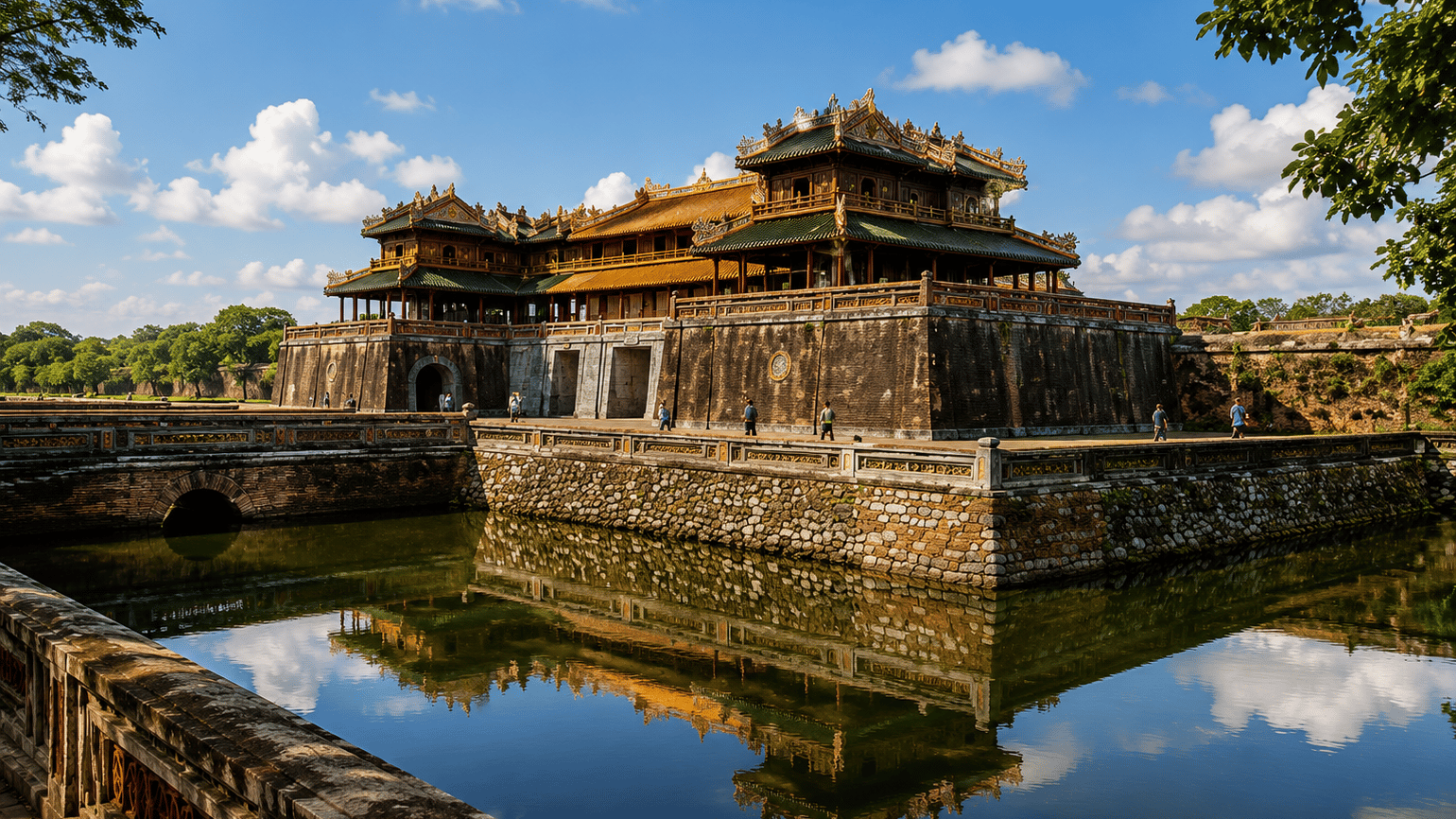
Southeast Asia · Fortified Structure
Hue Citadel
Vietnam
Hue Citadel combines historic walls and canals with an inhabited urban district. Housing and everyday services offer a strong starting habitat, but a small group cannot secure the entire enclosure or assume city water keeps flowing.
Overall
4 out of 10Defensibility
4 out of 10Isolation
0 out of 10Sustainability
8 out of 10Ranking context
How this base ranks
Global
#67 of 88 · Top 76%
Region · Southeast Asia
#5 of 7 · Top 71%
Base Type · Fortified Structure
#16 of 18 · Top 89%
Field assessment
At a glance
Bottom Line
Choose a manageable refuge within the Citadel; its residential fabric is useful, but treating the whole historic capital as a defended compound would overwhelm a small community.
Biggest Trade-off
The inhabited streets that provide shelter and services also bring potential threats inside the historic defensive line.
Most Likely Failure
Loss of dependable drinking water forces collection beyond the occupied refuge, increasing contact with an already inhabited urban environment.
Score rationale
Why it scores this way
Defensibility · 4/10
Walls, gates and canals create defensive depth, but they enclose an inhabited urban geography rather than an empty fort. A small group can exploit particular strongpoints without being able to hold every approach.
Advantages
- Existing internal barriers can help separate an occupied position from adjacent streets.
Limitations
- An outer wall cannot contain threats already moving among homes and roads inside it.
Isolation · 0/10
The Citadel sits within modern Hue and contains substantial residential activity of its own. Its defensive boundaries provide local separation, not geographic distance from population sources.
Advantages
- Gateways and water edges interrupt some immediate approaches even within the surrounding city.
Limitations
- Potential pressure begins inside the evaluated geography; there is no remote buffer that the group can count on to delay contact.
Sustainability · 8/10
Existing housing, sanitation and food-preparation space provide a developed domestic habitat. Continued use depends on water delivery, functioning urban services and keeping flood damage manageable.
Advantages
- A small group has extensive choices of sheltered living and work space without constructing accommodation.
Limitations
- Spare buildings do not replace failed water distribution or establish a renewable food supply within the boundary.
Survival horizons
How survival changes over time
Establish a local refuge
First 7 Days
Identify an occupied area the group can watch, confirm potable water and inspect accessible provisions. Assess internal streets and nearby buildings before committing people to distant gates or a tour of the whole Citadel.
Positive factors
- Existing homes and internal barriers provide an immediate basis for shelter and controlled movement.
Risks
- Assuming the historic perimeter means a clean interior exposes the group before local conditions are understood.
Maintain essential routines
First 100 Days
As supplies are consumed, organise water checks, sanitation, repairs and watches around actual daily needs. Monitor drainage and building condition so flood-related disruption does not cut the occupied area off from essentials.
Positive factors
- Domestic buildings retain useful shelter even when some wider services become unreliable.
Risks
- Each journey for replacement supplies adds contact exposure, while utility faults can consume labour needed for watches.
Replace the city supply cycle
Long Term
Continued occupation requires dependable water and food replacement as municipal systems and normal deliveries decline. Existing canals and urban space do not establish that transition; the evidence supports a supplied habitat, not a self-sufficient enclave.
Positive factors
- Passive walls and sheltered rooms remain useful assets without continuous powered operation.
Risks
- Water interruption and accumulated flood or building damage can make a defensible room increasingly difficult to inhabit.
Visual survey
Gallery
Location context
The Lay of the Land
Tactical assessment
Practical Reality
Best Use
Concentrate occupation around shelter with verified drinking water and short, observable supply routes. Use existing walls and gateways locally, while keeping movement through the wider urban enclosure limited.
Strengths
- Surviving walls, gates and internal monumental structures provide existing barriers and choices of local fallback position.
- Residential buildings and everyday service space offer room to separate sleeping, food preparation and storage.
- A supplied urban water context gives the group a real service to inspect before relying on unverified alternative water.
Key Risk
Watches, water checks, sanitation and flood-related upkeep compete for the same small workforce. Maintaining access to essentials is a larger task than securing a single building.
Weaknesses
- Streets and residential areas inside the historic line leave internal approaches to monitor as well as external gates.
- Municipal water delivery does not establish protected independent production or reserves inside the Citadel.
- Flood exposure and continuing restoration needs can disrupt occupied buildings, drainage and journeys to essential services.
Reality Check & Constraints
Historic fortification and extensive housing establish neither a cleared interior nor independent supplies. The management plan records a large resident population; it is not a current headcount or a survivor workforce.
Assumptions / constraints
- The fixed twenty-person community has ordinary practical skills; no garrison, resident workforce or municipal utility crew is assumed.
- The approved 159.71-hectare Citadel component remains the evaluated Base. Choosing a smaller occupied refuge does not redefine its boundary or add other Hue monuments.
- Accessible food, potable reserves, equipment condition and post-outage water continuity remain unverified. Canal water is not assumed drinkable.
Decision context
Rivals / Alternatives
Similar rival
Palawan
Philippines · Isolated Landmass
Palawan keeps the same Southeast Asia risk context, with only 0.0 points between the overall scores and closely matched isolation pressure.
Overall 4/10
Strongest alternative
Suomenlinna Fortress
Finland · Fortified Structure
Suomenlinna Fortress scores 6.3 overall versus 4.0, adding a stronger isolation profile while staying relevant as another fortified structure.
Overall 6.3/10
Wildcard rival
Fastnet Lighthouse
Ireland · Landmark Structure
Fastnet Lighthouse changes the strategy: it is built around the landmark structure strategy with a isolation edge, while Hue Citadel holds more of the sustainability advantage.
Overall 6.3/10