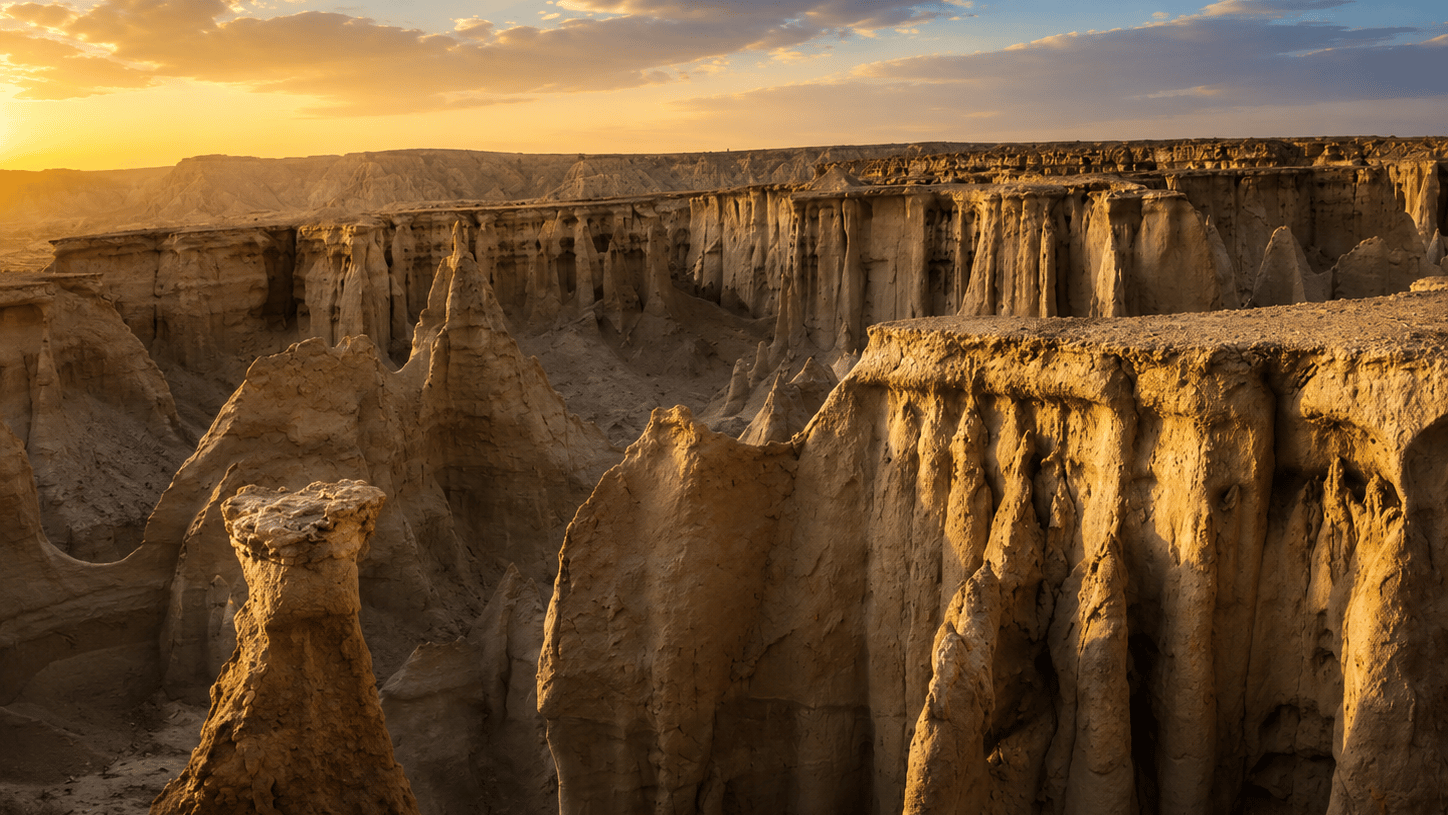
Middle East · Isolated Landmass
Qeshm Island
Iran
Qeshm offers an inhabited island's housing, fisheries and substantial water infrastructure, close to mainland Iran. Its apparent abundance comes with two hard limits: a small group cannot control the whole island, and much of its drinking water depends on keeping industrial systems running.
Overall
3.3 out of 10Defensibility
1 out of 10Isolation
2 out of 10Sustainability
7 out of 10Ranking context
How this base ranks
Global
#82 of 88 · Top 93%
Region · Middle East
#5 of 5 · Top 100%
Base Type · Isolated Landmass
#18 of 19 · Top 95%
Field assessment
At a glance
Bottom Line
A broad resource base with a fragile operating chain: choose occupation around verified water access, rather than mistaking island-wide capacity for supplies a small group can secure.
Biggest Trade-off
The plants that make a hot, arid island habitable also tie everyday survival to fuel, controls, treatment and repairs beyond ordinary household maintenance.
Most Likely Failure
A prolonged plant or power interruption leaves occupied buildings without dependable potable water, forcing repeated journeys through an already populated island.
Score rationale
Why it scores this way
Defensibility · 1/10
A long coastline, scattered settlements and many ports leave no manageable island-wide perimeter. Existing buildings allow local shelter, but twenty people cannot secure all routes between the places they may need.
Advantages
- Settled areas offer existing enclosed buildings from which to organise a limited occupied position.
Limitations
- Protecting one building leaves shore access, roads and distant utility sites outside the group's continuous control.
Isolation · 2/10
The sea interrupts ordinary ground movement from mainland Iran, yet Qeshm contains a substantial resident population and sits beside busy regional routes. Exposure can begin inside the island before outside arrivals matter.
Advantages
- Crossing from the mainland requires a marine or air journey rather than a continuous road approach.
Limitations
- Retreating inland does not remove threats already distributed among the island's towns and villages.
Sustainability · 7/10
Housing, water production, electricity and fisheries provide much more than bare shelter. Their value to the group depends on a working local service chain; large installed capacity cannot be treated as effortless household supply.
Advantages
- Several documented water-and-power installations give more than one potential service pathway to investigate.
Limitations
- Uneven water coverage and technical dependencies mean a suitable building may still lack a dependable drinking-water connection.
Survival horizons
How survival changes over time
Verify water before settling
First 7 Days
Locate an occupied position near confirmed potable water, check accessible stores and map the journeys it requires. A short, repeatable daily circuit matters more than trying to take over Qeshm's ports or plants.
Positive factors
- Existing settlement buildings reduce the immediate need to create shelter in the heat.
Risks
- A visible reservoir or desalination plant is not proof of safe water at the tap; test access and condition before relying on it.
Trace consumption and faults
First 100 Days
As supplies are consumed, measure water access and food use while identifying which plant, power and distribution links sustain the occupied area. Reduce unnecessary travel before unreliable services make it compulsory.
Positive factors
- Fisheries and aquaculture offer established local food pathways to assess alongside stored goods.
Risks
- A small workforce cannot maintain several industrial systems simply by rotating between them.
Keep renewal within reach
Long Term
Continued habitation requires repeatable food access and potable-water provision after ordinary fuel and parts deliveries stop. The evidence establishes substantial infrastructure, not a low-complexity replacement for its essential operating inputs.
Positive factors
- Passive buildings retain shelter value even when large plants become unreliable.
Risks
- Fish production cannot compensate for a broken drinking-water chain or replace imported dietary and technical supplies by itself.
Visual survey
Gallery
Location context
The Lay of the Land
Tactical assessment
Practical Reality
Best Use
Keep living space, watches and verified drinking-water access close together within the existing settlement network. Use reachable fisheries and stores only as their condition and safe access are confirmed.
Strengths
- Existing towns and villages offer accommodation and workspace far beyond the group's sleeping needs.
- Water storage and several desalination projects provide meaningful infrastructure to inspect rather than a wholly undeveloped supply problem.
- Fishing ports and aquaculture activity connect the island to real food production.
Key Risk
Water production and distribution may fail together with power. Multiple plants provide options, but they do not remove the shared need for machinery, fuel and competent operation.
Weaknesses
- Long distances between useful assets add watch duties and travel exposure to ordinary provisioning.
- Industrial water and electricity depend on continuing fuel, parts and specialist support.
- Food diversity and service coverage are uneven; island-wide abundance says little about one occupied building's usable reserves.
Reality Check & Constraints
The evaluated Base is all of Qeshm, not a selected cave, fort or port. Twenty capable adults inherit neither control of its population nor the specialist workforce needed to run its utilities.
Assumptions / constraints
- Usable stocks, working equipment and crew skills require inspection; no operating duration or guaranteed mainland delivery is assumed.
Decision context
Rivals / Alternatives
Similar rival
Fiji Islands
Fiji · Isolated Landmass
Fiji Islands keeps the same isolated landmass strategy, with only 0.3 points between the overall scores and closely matched sustainability pressure.
Overall 3.7/10
Strongest alternative
Heligoland
Germany · Isolated Landmass
Heligoland scores 6.3 overall versus 3.3, adding a stronger isolation profile while staying relevant as another isolated landmass.
Overall 6.3/10
Wildcard rival
Fort Jefferson
United States · Fortified Structure
Fort Jefferson changes the strategy: it is built around the fortified structure strategy with a defensibility edge, while Qeshm Island holds more of the sustainability advantage.
Overall 6.7/10